When most people think about assisted evacuation, they think of an evacuation chair.
However, an evacuation sledge can sometimes be a better solution, particularly in certain care and healthcare environments. An evacuation chair is not automatically the right answer for every situation. The equipment needs to be appropriate for the people who may need it, the building and the evacuation strategy.
The decision should form part of the wider fire risk assessment and emergency evacuation arrangements.
What Is an Evacuation Sledge?
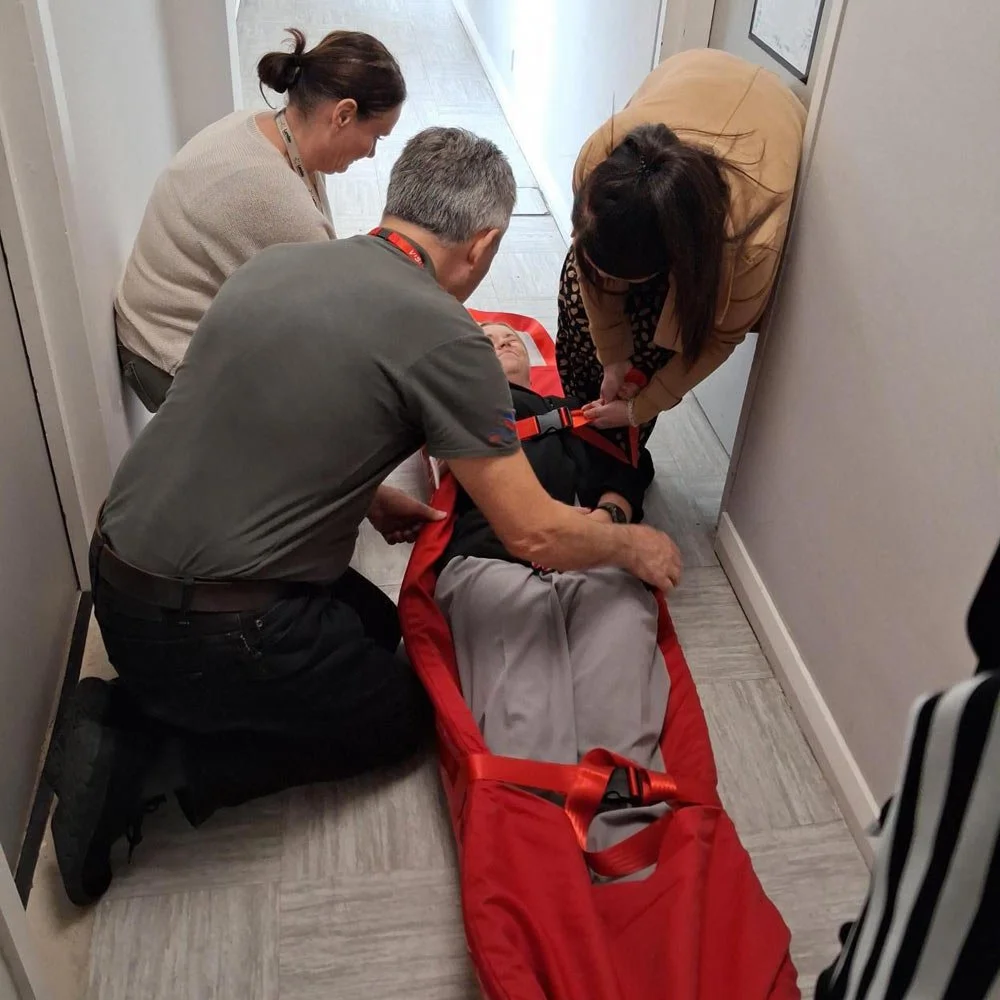
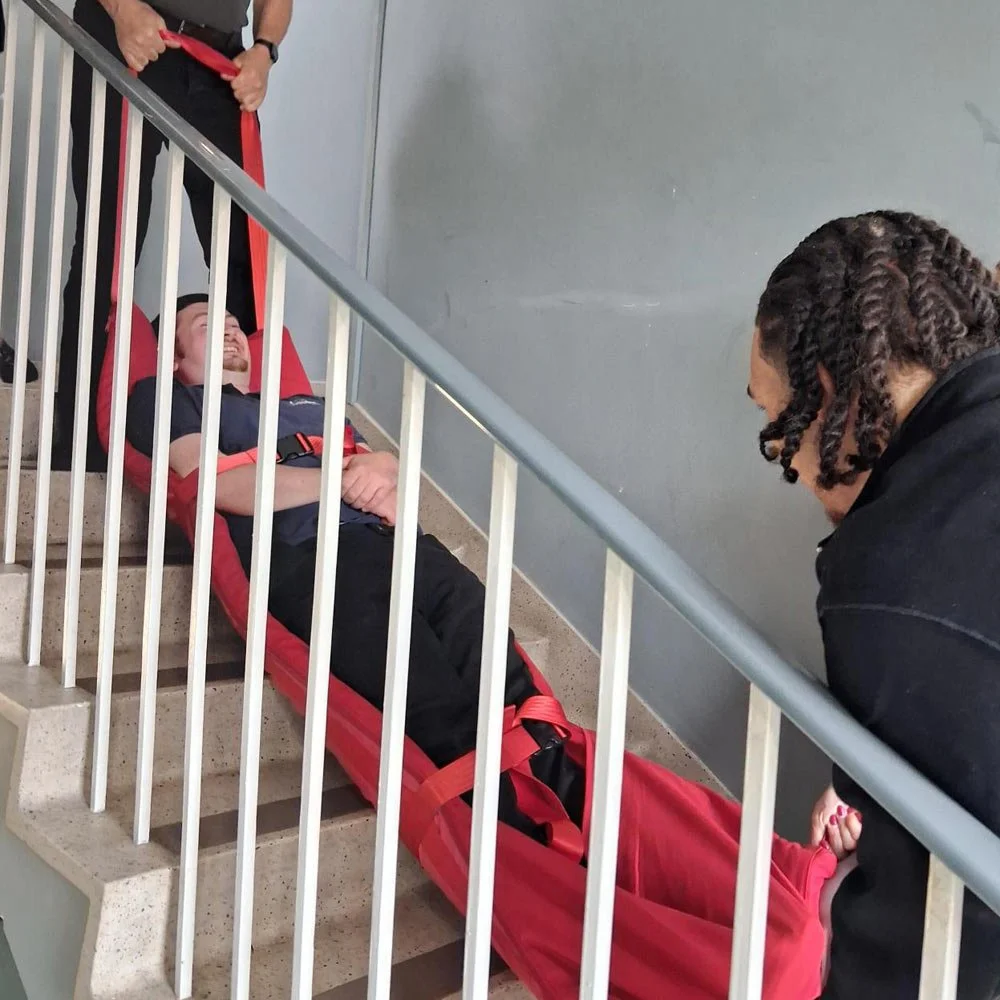
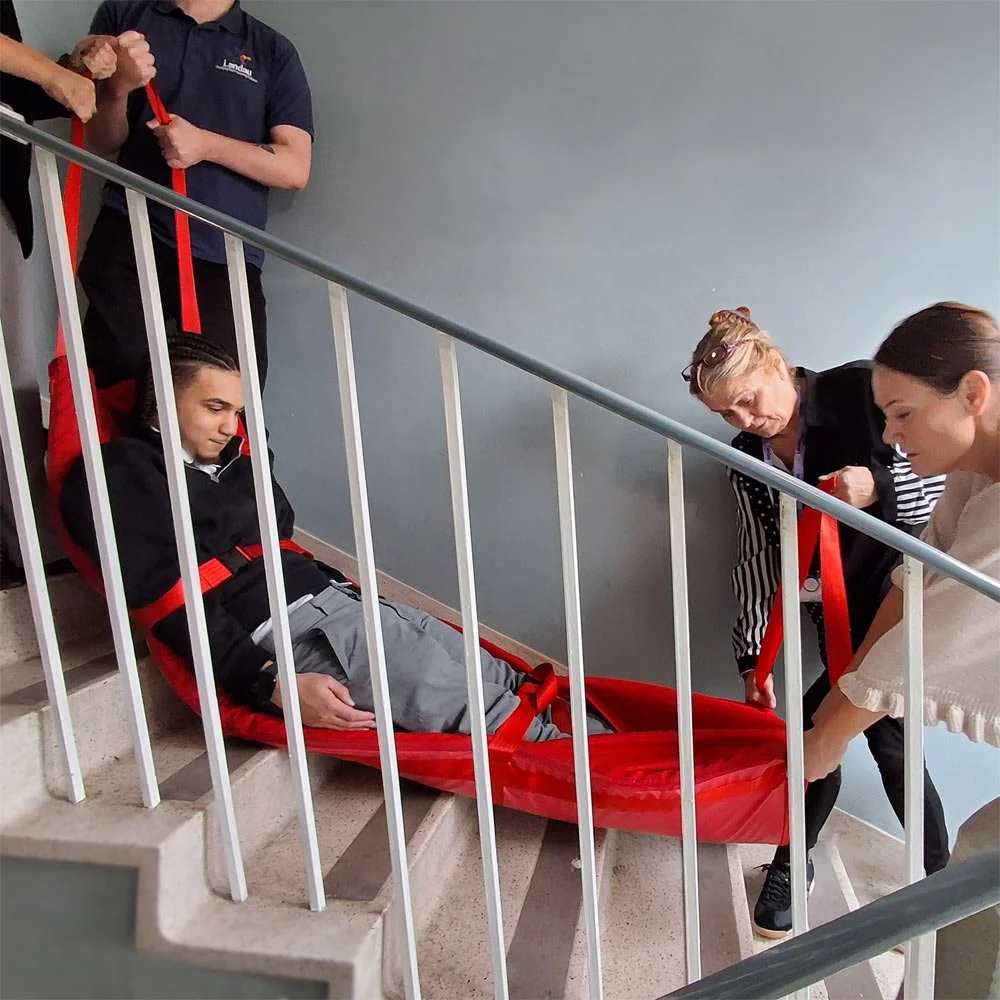
An evacuation sledge is designed to allow a person to be secured onto a low-profile sledge and moved during an emergency evacuation.
Unlike an evacuation chair, the person is generally evacuated in a lying or reclined position, rather than sitting upright.
There are different types of evacuation sledges, and their capabilities vary. Some are designed primarily for horizontal movement, while others can be used on stairs. It is therefore important to understand exactly what a particular product is designed and tested to do before choosing one.
When Might a Sledge Be a Better Option?
There are circumstances where I would consider an evacuation sledge particularly useful.
People Who Cannot Sit Upright
Some residents or patients may not be able to maintain a seated position safely in an evacuation chair.
A sledge may provide a more appropriate method for someone who needs to remain lying down or has very limited postural control.
This can be particularly relevant in care homes and healthcare settings, where the people requiring evacuation may have significantly reduced mobility.
Minimising Transfers
Moving somebody from a bed or other surface into an evacuation chair can require a transfer.
For some individuals, that may be difficult or inappropriate.
Depending on the sledge's design and the individual's circumstances, a sledge may allow the person to be transferred onto the evacuation equipment with less movement than would be required for an upright evacuation chair.
This is an important consideration when assessing the needs of someone who is very frail or has limited mobility.
Evacuating From Areas Where a Chair Is Less Practical
The physical layout of a building can also influence the choice.
A sledge may be useful for moving someone through particular areas where manoeuvring an evacuation chair is difficult. However, this needs to be assessed against the entire escape route, rather than simply the first part of the journey.
The Disadvantages of an Evacuation Sledge
A sledge isn't a universal replacement for an evacuation chair.
They Can Require More People
Depending on the equipment, the person being evacuated and the route involved, an evacuation sledge may require more than one trained operator.
That needs to be considered carefully, particularly in care homes where staffing levels can be much lower at night.
They May Be More Difficult to Use on Stairs
This is one of the most important points.
Not every evacuation sledge is designed for use on stairs, and those that are will have specific operating requirements.
An evacuation chair is specifically designed for stair descent, whereas the suitability of a sledge for stairs depends on the specific product and circumstances.
The manufacturer's instructions and training requirements should always be followed.
The Person Is Evacuated in a Different Position
Being evacuated lying down can be preferable for some people, but it may not be suitable or comfortable for everyone.
The person's condition, ability to tolerate the position and any medical considerations need to be taken into account.
So Which Should You Choose?
I wouldn't start with the equipment. I'd start with the person, the building and the evacuation route.
Consider:
Who may need assistance?
What are their individual mobility and handling needs?
Can they safely sit upright?
Where are they likely to need assistance?
Are there stairs involved?
How many staff are available to assist?
What happens during night-time or reduced staffing?
Where can the equipment be stored?
Can staff be trained and practised in its use?
The Fire Risk Assessment and, where appropriate, the individual's PEEP should inform the decision.
Government guidance makes the same fundamental point about evacuation chairs: they are not an automatic solution for every disabled person, and their use needs to be considered as part of a wider escape system. (GOV.UK)
My Advice
If you're deciding between an evacuation chair and an evacuation sledge, don't simply buy the equipment that looks most suitable in a catalogue.
Look at the actual circumstances in your building.
For some organisations, particularly offices and commercial premises where stair evacuation is required for people who can sit upright, an evacuation chair may be the obvious solution.
For some care homes and healthcare environments, an evacuation sledge may be a better alternative for particular residents or patients.
And in some circumstances, a combination of equipment may be appropriate.
The important thing is that the equipment is part of a properly considered evacuation strategy, with trained staff who understand how and when to use it.
If you're unsure whether an evacuation chair, evacuation sledge or another solution is appropriate for your building, contact me, Paul McCann. I'm happy to discuss your circumstances and provide practical, independent advice before you make a purchase.