What Happens During Evacuation Chair Training?
One of the questions I'm often asked is:
"What actually happens during evacuation chair training?"
Some people imagine they'll spend a couple of hours sitting in a meeting room watching a presentation. Others expect it to be entirely practical.
In reality, it's a combination of both.
From my experience, the best training explains why evacuation chairs are needed before giving delegates the confidence to use one safely. By the end of the course, my aim is for every delegate to understand not only how to operate the chair, but also when it should be used and the important role they play in helping someone evacuate safely.
Understanding the Bigger Picture
I always begin by putting evacuation chairs into context.
We discuss the legal responsibilities placed on employers and Responsible Persons, together with the importance of having suitable evacuation arrangements for people who may need assistance during an emergency.
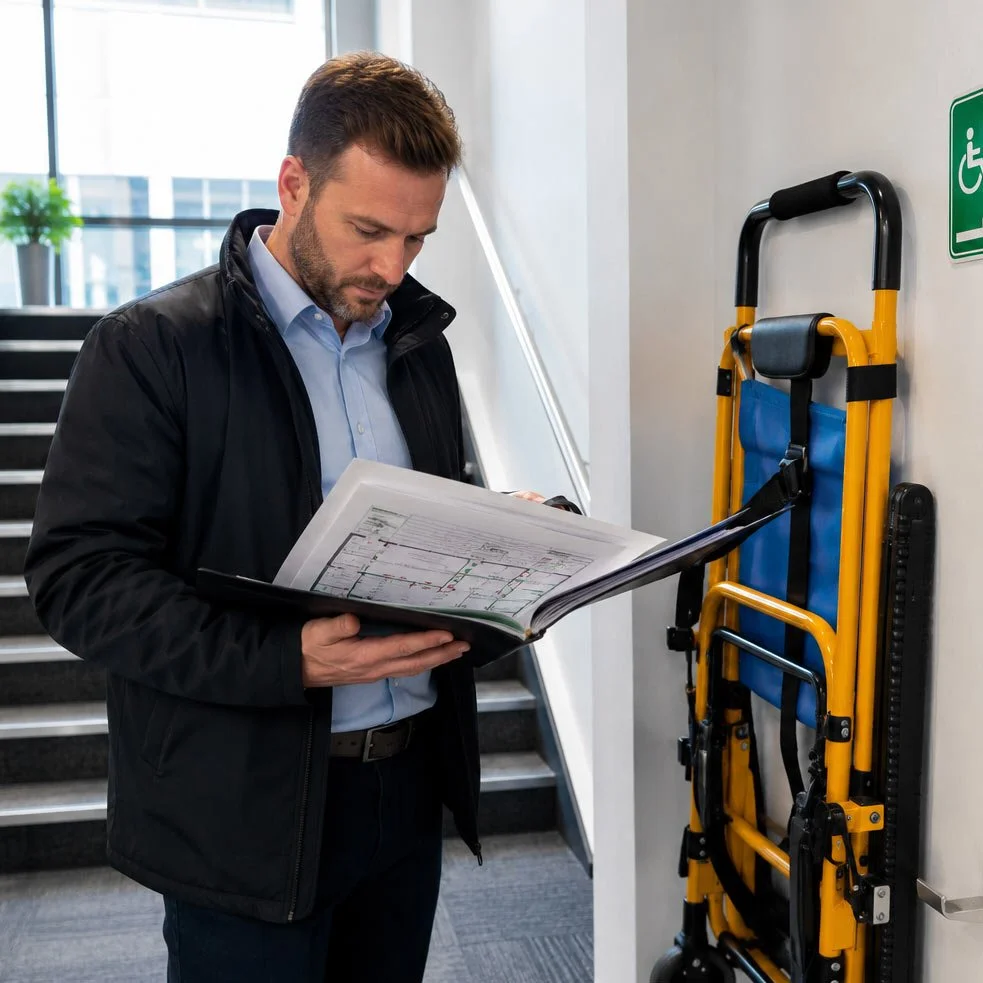
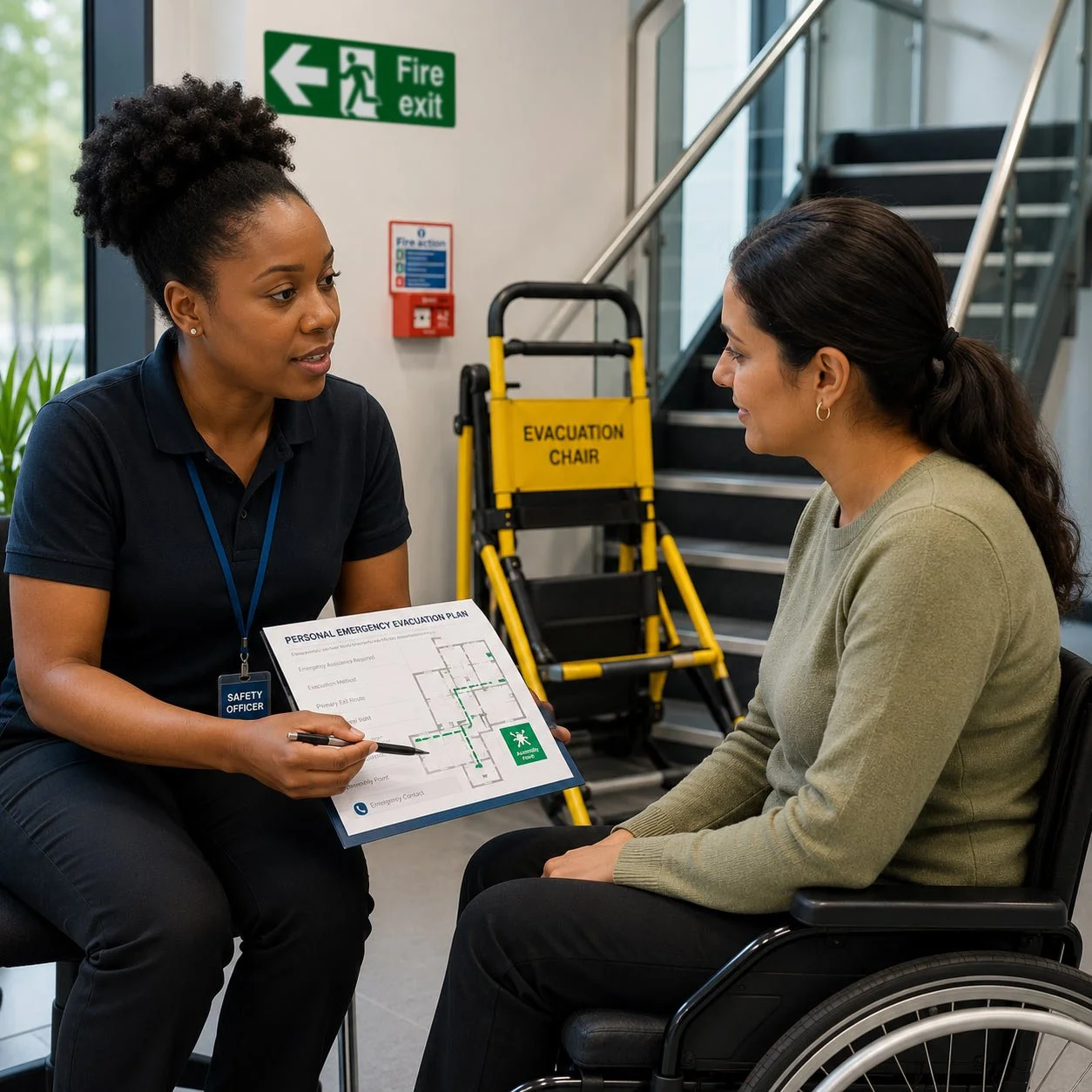
This naturally leads into Personal Emergency Evacuation Plans (PEEPs), emergency evacuation procedures and the role an evacuation chair may play within those arrangements.
It's important that delegates understand they're not simply learning to use a piece of equipment—they're becoming part of the organisation's emergency evacuation plan.
Who Might Need an Evacuation Chair?
One of the biggest misconceptions I come across is that evacuation chairs are only for wheelchair users.
During the course, we discuss the wide range of people who may require assistance during an evacuation and why every situation should be considered individually.
Understanding who may need assistance helps operators appreciate why planning and communication are just as important as operating the chair itself.
Getting Hands-On
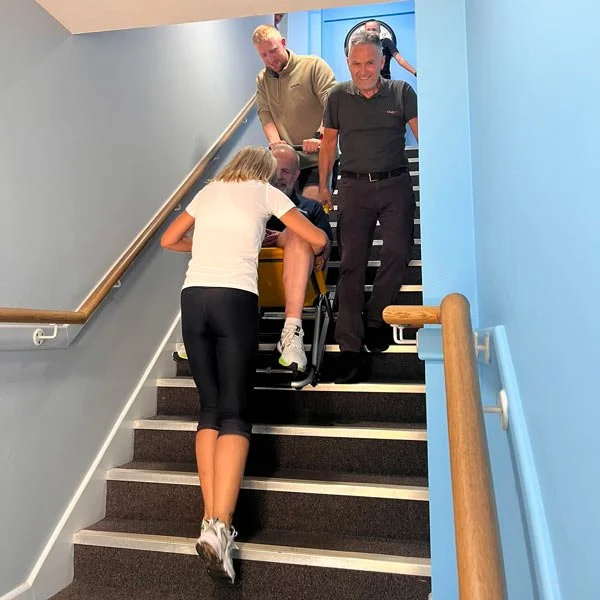
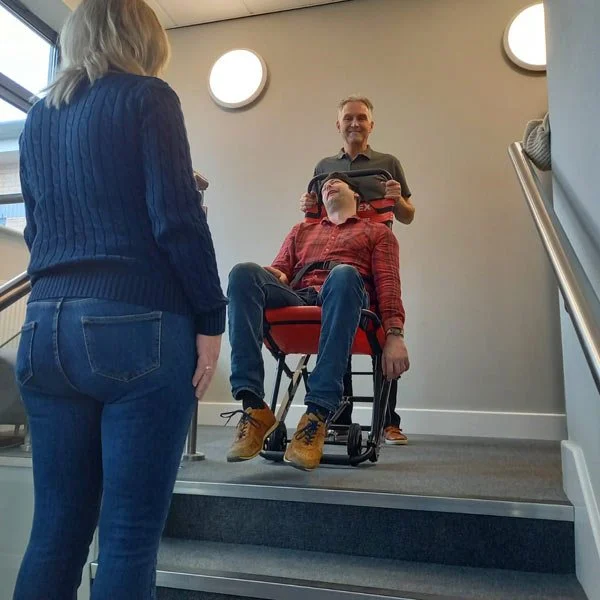
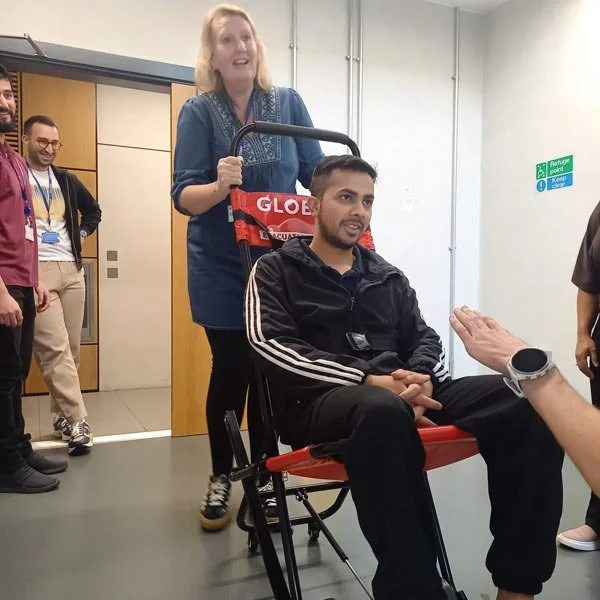
Once everyone understands the principles, we move on to the practical part of the course.
This is where confidence really starts to build.
Delegates learn how to:
locate the evacuation chair quickly
deploy it correctly
prepare it for use
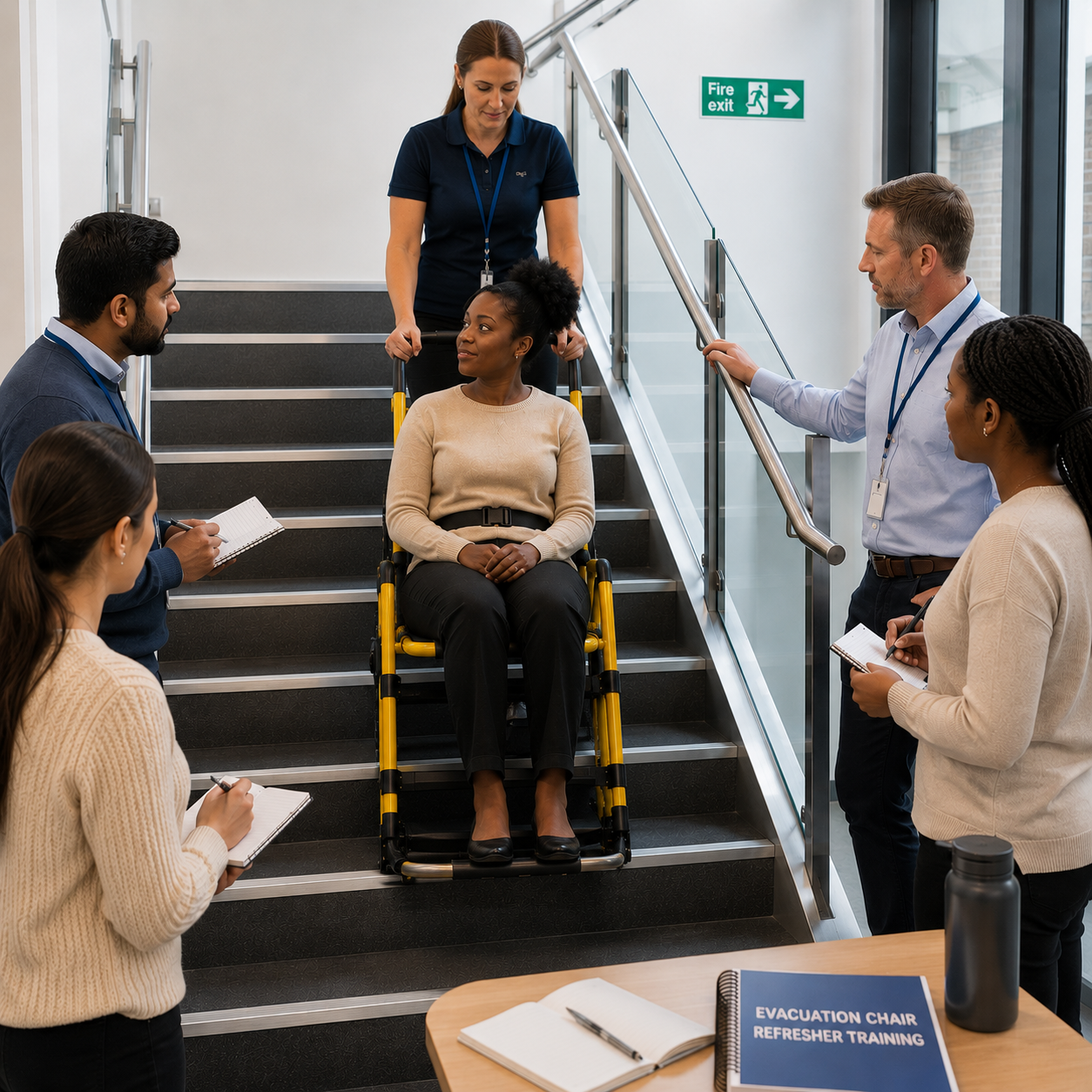
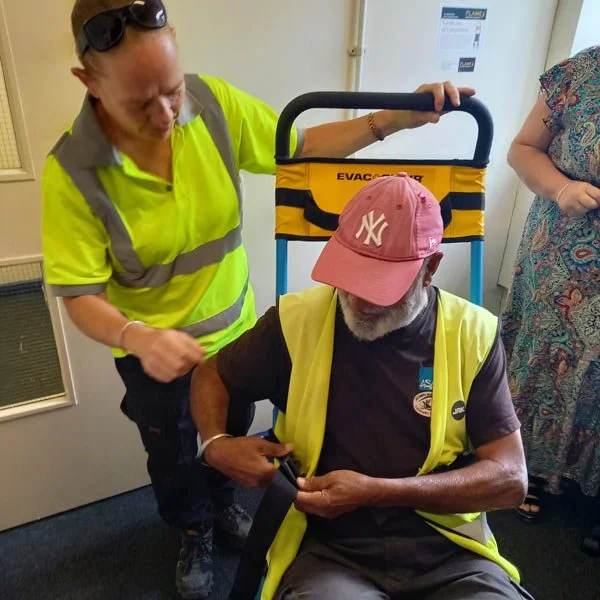
position a person safely in the chair
secure the safety belt
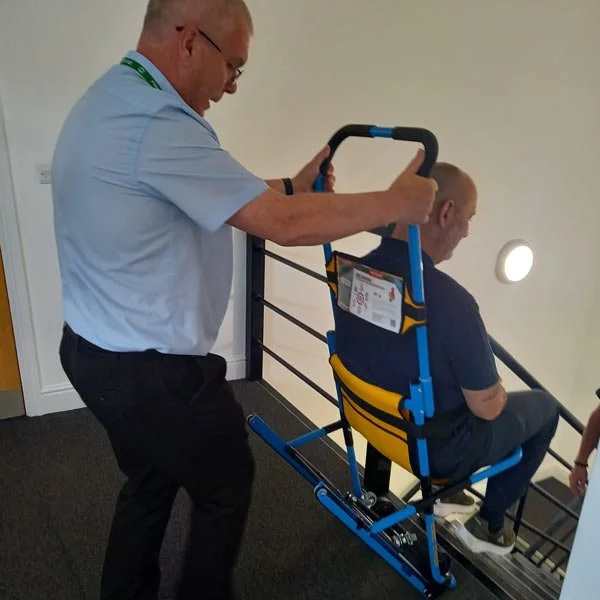
manoeuvre the chair correctly
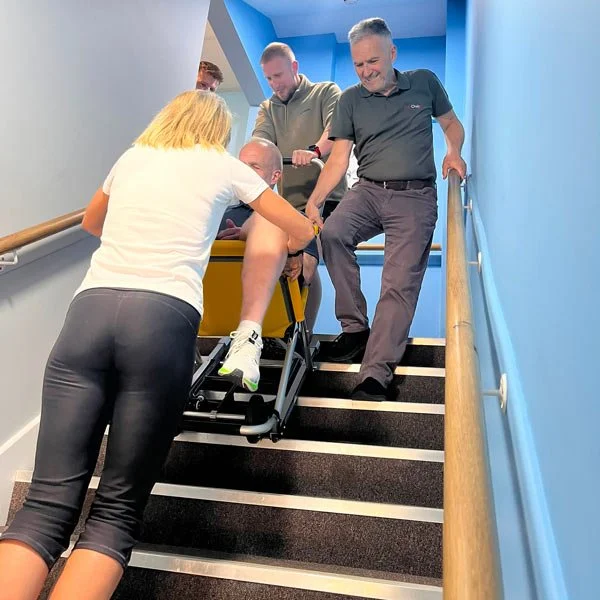
negotiate staircases safely
return the chair to its storage position after use.
Every stage is demonstrated before delegates have the opportunity to practise themselves under supervision.
Building Confidence
For many delegates, this is the first time they've ever handled an evacuation chair.
It's perfectly normal to feel a little apprehensive at first.
That's why I encourage everyone to practise each stage until they're comfortable with the equipment.
By the end of the session, most people are surprised by how straightforward the chair is to use once they've been shown the correct techniques.
Confidence comes through practical experience, not simply reading instructions.
Why Two Operators Are Recommended
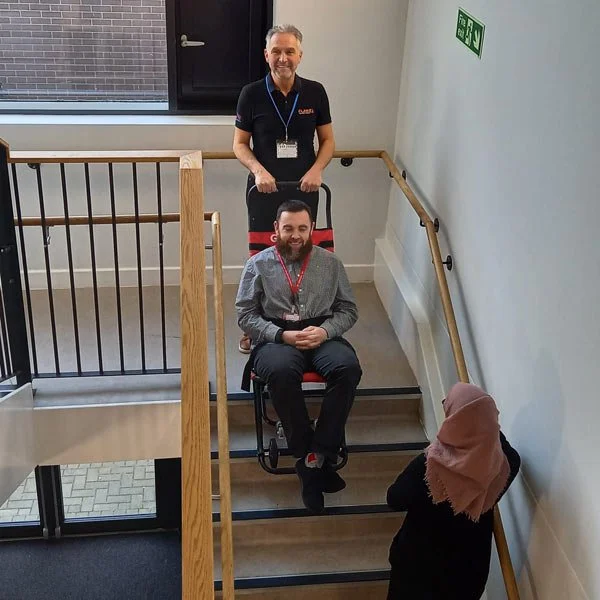
Throughout the training, I recommend that two trained operators are available whenever an evacuation chair is used.
Having two people provides additional reassurance, helps when opening doors along the escape route and allows operators to work together safely during an evacuation.
During training, a delegate may occasionally be unable to operate the chair due to the user's weight. These delegates receive a certificate stating that they have attended and successfully completed the training for: Assisting an Evacuation Chair Operator, securing the occupant and assisting with smooth movement during evacuation.
More Than Just Operating the Chair
The course isn't only about learning to move someone downstairs.
We also cover disability awareness, respectful communication and safe handling techniques so delegates understand how to assist people with dignity and confidence.
Good communication can often be just as important as good technique, particularly when someone may already be feeling anxious during an emergency.
The Right Environment for Training
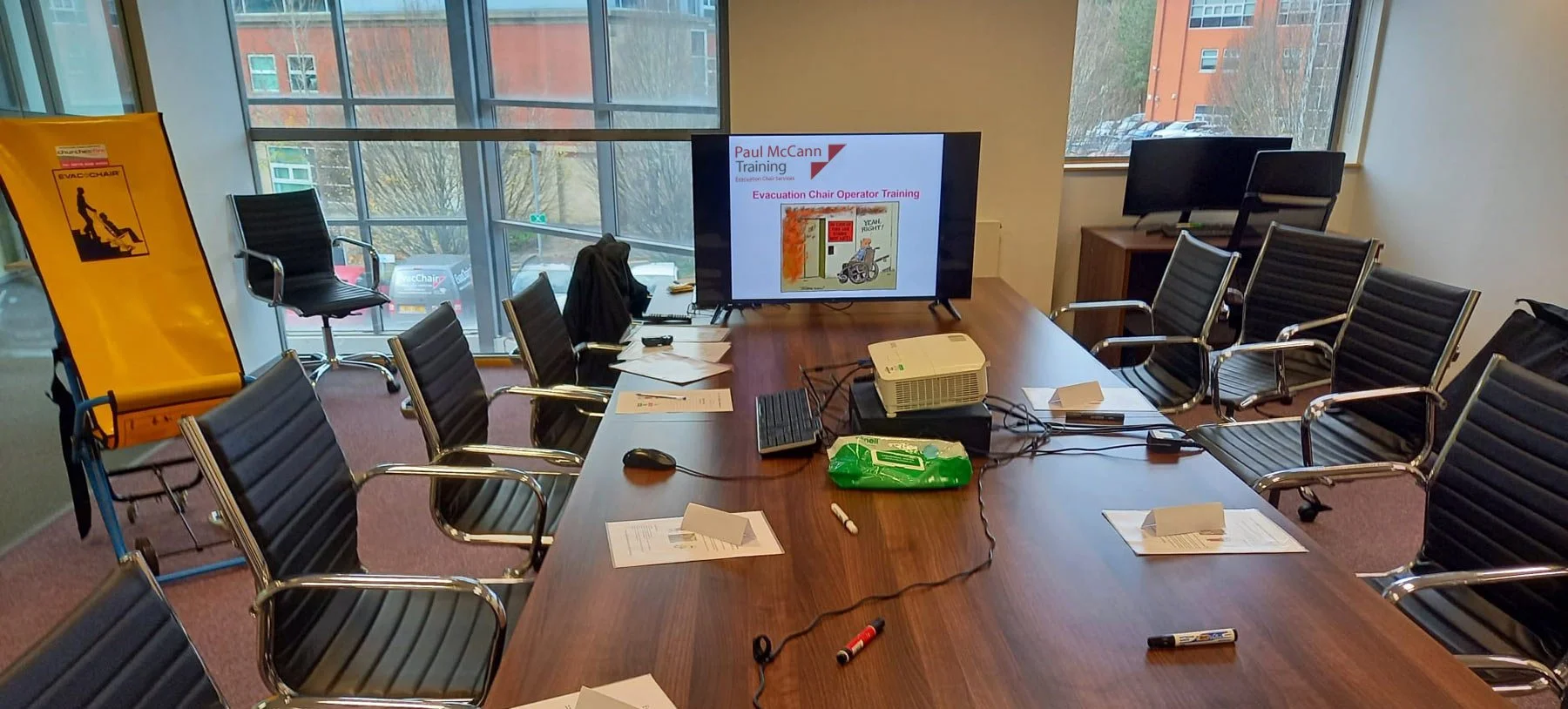
To get the most from the practical session, the training needs to take place in a suitable environment.
Ideally, this means having:
a room for the theory session
a quiet staircase where delegates can practise safely without interruption.
Using your own building helps make the training more relevant because delegates practise in the same environment they would use in an emergency.
Demonstrating Competence
Every delegate has the opportunity to demonstrate the correct use of the evacuation chair before completing the course.
Successful delegates receive a certificate confirming they have completed specific evacuation chair operator training and demonstrated the correct operating techniques.
Training Doesn't End on the Day
One point I always emphasise is that practical skills fade if they aren't refreshed.
Regular practice and refresher training help operators remain confident and competent, particularly as staff, buildings and evacuation procedures change over time.
Emergency equipment is only as effective as the people using it.
Investing in Confidence
An evacuation chair is an important piece of safety equipment, but it's only one part of an effective emergency evacuation strategy.
Proper training gives operators the knowledge, practical skills and confidence to use that equipment correctly should the need ever arise.
My aim is always the same: to leave delegates feeling capable, prepared and confident, while helping organisations meet their responsibilities and improve the safety of everyone who uses their buildings.
If you'd like to learn more about evacuation chair training or discuss the most appropriate course for your organisation, I'm always happy to offer practical, impartial advice.